
Table of contents
Birch plywood is widely used in furniture manufacturing, cabinetry, and interior construction because of its strength, stability, and clean appearance. However, many buyers and even some professionals do not fully understand how birch plywood is manufactured. The production process plays a direct role in determining quality, consistency, and performance.
This guide explains the full birch plywood manufacturing process in a clear and practical way. From raw log selection to final panel finishing, each step contributes to the final product that reaches factories and job sites.
Raw Material Selection and Log Preparation
The process begins with selecting suitable birch logs. Manufacturers prioritize logs with straight grain, minimal defects, and consistent diameter. High-quality raw material ensures uniform veneers, which directly affects the strength and appearance of the final panel.
After harvesting, logs are transported to the factory and stored under controlled conditions. Before processing, logs are soaked or steamed in hot water. This softens the wood fibers and makes veneer peeling smoother and more consistent.
Why Log Quality Matters
Poor-quality logs produce uneven veneers, which can lead to weak bonding, surface defects, and inconsistent thickness. High-quality logs create uniform layers, which improve structural performance and visual consistency.
Veneer Peeling and Cutting
Once the logs are prepared, they are fed into a rotary peeling machine. The machine rotates the log against a sharp blade, slicing it into continuous thin sheets of veneer. This process is similar to unrolling a roll of paper.
The veneers are then cut into standard sizes and sorted based on quality. Higher-grade veneers are reserved for face layers, while lower-grade sheets are used in the core.
Thickness Control
Maintaining consistent veneer thickness is essential. Variations at this stage can lead to uneven panel thickness later. Modern factories use automated systems to control thickness with high precision.
Veneer Drying Process
Freshly peeled veneers contain high moisture content. Before assembly, they must be dried to a controlled level, usually between 8% and 12%.
Veneers pass through industrial dryers where hot air removes excess moisture. Proper drying ensures strong glue bonding and prevents warping or delamination in the finished plywood.
Moisture Control Importance
If veneers are too wet, glue will not bond properly. If they are too dry, they may crack or lose flexibility. Controlled drying balances these factors and ensures stable panel performance.
Layer Assembly and Glue Application
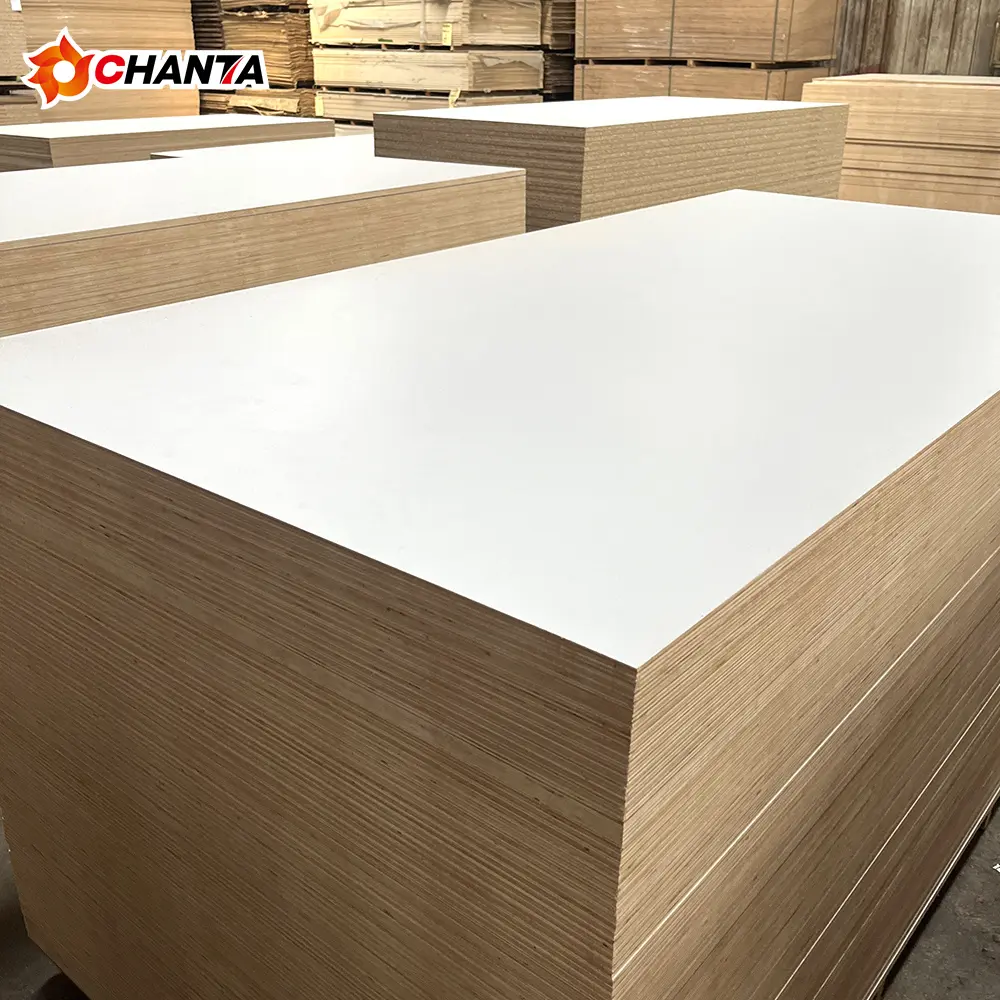
After drying, veneers are arranged into layers. Each layer is placed with its grain direction perpendicular to the adjacent layer. This cross-grain structure gives plywood its strength and dimensional stability.
Glue is applied between each veneer layer. Depending on the intended use, manufacturers choose different adhesives:
- Interior glue for dry applications
- WBP glue for moisture-resistant panels
The number of layers depends on panel thickness. For example, an 18mm panel typically contains multiple thin veneer layers stacked together.
Hot Pressing and Panel Formation
The assembled veneer stack is transferred to a hot press machine. Under high temperature and pressure, the glue cures and bonds the layers into a solid panel.
This step defines the structural integrity of birch plywood. Proper pressing ensures:
- strong bonding between layers
- uniform thickness
- flat panel surface
Pressing parameters such as temperature, pressure, and time must be carefully controlled to achieve consistent results.
Trimming, Sanding, and Surface Finishing
After pressing, panels are trimmed to standard sizes such as 4×8 feet. Edges are cut cleanly to ensure uniform dimensions.
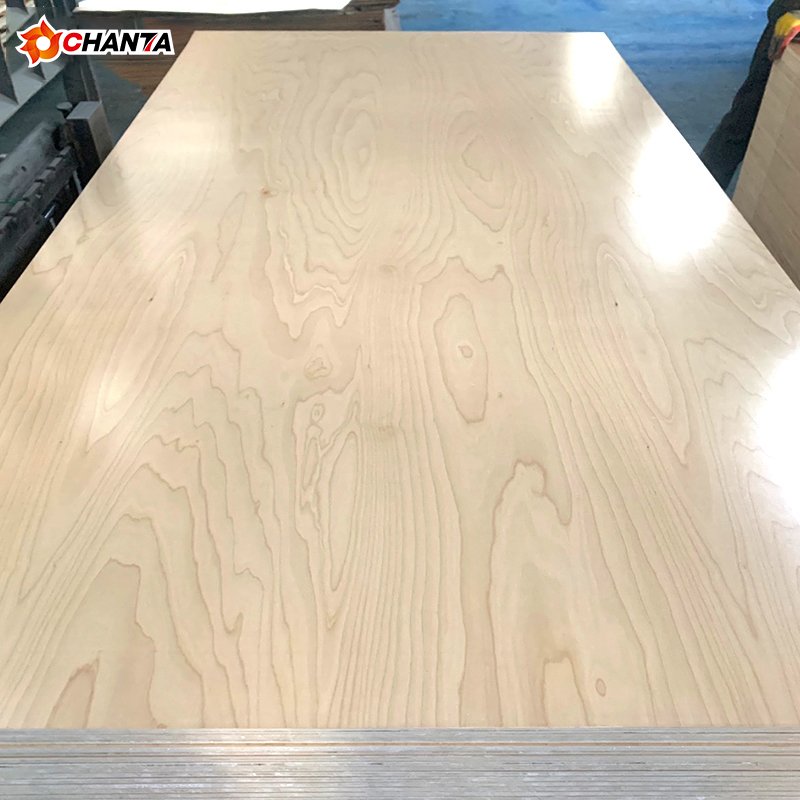
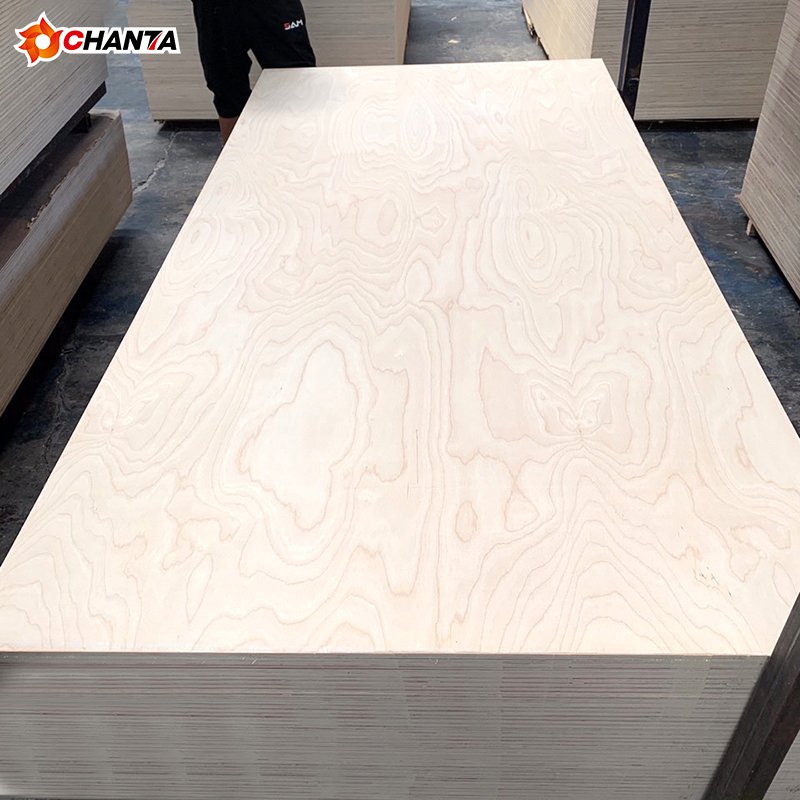
The panels then pass through sanding machines to smooth the surface and achieve precise thickness tolerance. This step is especially important for furniture-grade plywood where surface quality matters.
Depending on the final application, panels may receive additional treatments such as:
- surface grading and repair
- coating or lamination
- quality inspection and sorting
Quality Inspection and Grading
Before packaging, each panel undergoes quality inspection. Inspectors check for:
- surface defects
- thickness accuracy
- bonding strength
- moisture content
Panels are graded based on surface appearance and structural quality. This grading determines their final application and market value.
| Grade | Description | Application |
|---|---|---|
| A | Clean surface, minimal defects | High-end furniture |
| B | Minor repairs allowed | Cabinet bodies |
| C | Visible patches | Structural use |
Packaging and Export Preparation
Finally, panels are stacked, packed, and prepared for shipment. Packaging methods vary depending on export requirements. Common methods include palletized bundles with protective wrapping to prevent moisture damage during transport.
Proper packaging ensures that plywood arrives at its destination without warping, edge damage, or surface defects.
Final Thoughts
Understanding how birch plywood is manufactured helps buyers make better sourcing decisions. Each stage—from log selection to final inspection—affects the performance and reliability of the finished product.
High-quality birch plywood is not just about raw materials. It depends on controlled processes, precise manufacturing, and consistent quality standards. Buyers who understand these factors can better evaluate suppliers and ensure long-term performance in their applications.







1 Comment