Table of contents
- Why Core Construction Matters More Than Surface Appearance
- The Most Common Birch Plywood Core Types
- Full Birch Core vs Mixed Core Comparison
- Which Core Type Is Best for Furniture Manufacturing?
- How Core Structure Affects Strength, Weight and CNC Performance
- What EU and US Importers Should Look For
- How TOP WOOD Controls Core Quality in Vietnam
When buyers evaluate birch plywood, most attention goes to the face veneer, surface grade, thickness, or price. However, experienced furniture manufacturers and importers know that the real performance of plywood is often determined by what is hidden inside the panel. Understanding different birch plywood core types is one of the most important steps when sourcing plywood for furniture, cabinetry, CNC processing, and interior projects.
The core structure affects strength, weight, screw-holding performance, machining quality, dimensional stability, and long-term durability. Two plywood sheets may look almost identical on the surface, but perform completely differently in production because they use different core materials.
As a professional Vietnam birch plywood supplier under Chanta Group, TOP WOOD works with global furniture manufacturers, distributors, and importers who require stable quality and transparent specifications. One of the most common questions we receive is: “Which plywood core should I choose?” The answer depends on the intended application, budget, and performance requirements.
In this guide, we will explain the most common birch plywood core types, compare their advantages and disadvantages, and help buyers choose the most suitable option for their projects.
Why Core Construction Matters More Than Surface Appearance
The face veneer is what buyers see first, but the core determines how the panel behaves during processing and daily use. A beautiful face veneer cannot compensate for a weak or inconsistent core.
The plywood core directly influences:
- Load-bearing strength
- Dimensional stability
- Screw-holding capability
- CNC machining performance
- Resistance to warping and twisting
- Panel weight
- Long-term durability
For example, a cabinet manufacturer may require excellent screw retention for hinges and hardware. In that case, core quality becomes more important than surface appearance. Likewise, a CNC furniture factory needs a stable internal structure to achieve clean cuts and consistent machining results.
This is why professional buyers evaluate both face grade and core construction before placing bulk orders.
The Most Common Birch Plywood Core Types
Modern plywood manufacturing uses several different core structures. Each has its own advantages, cost level, and suitable applications.
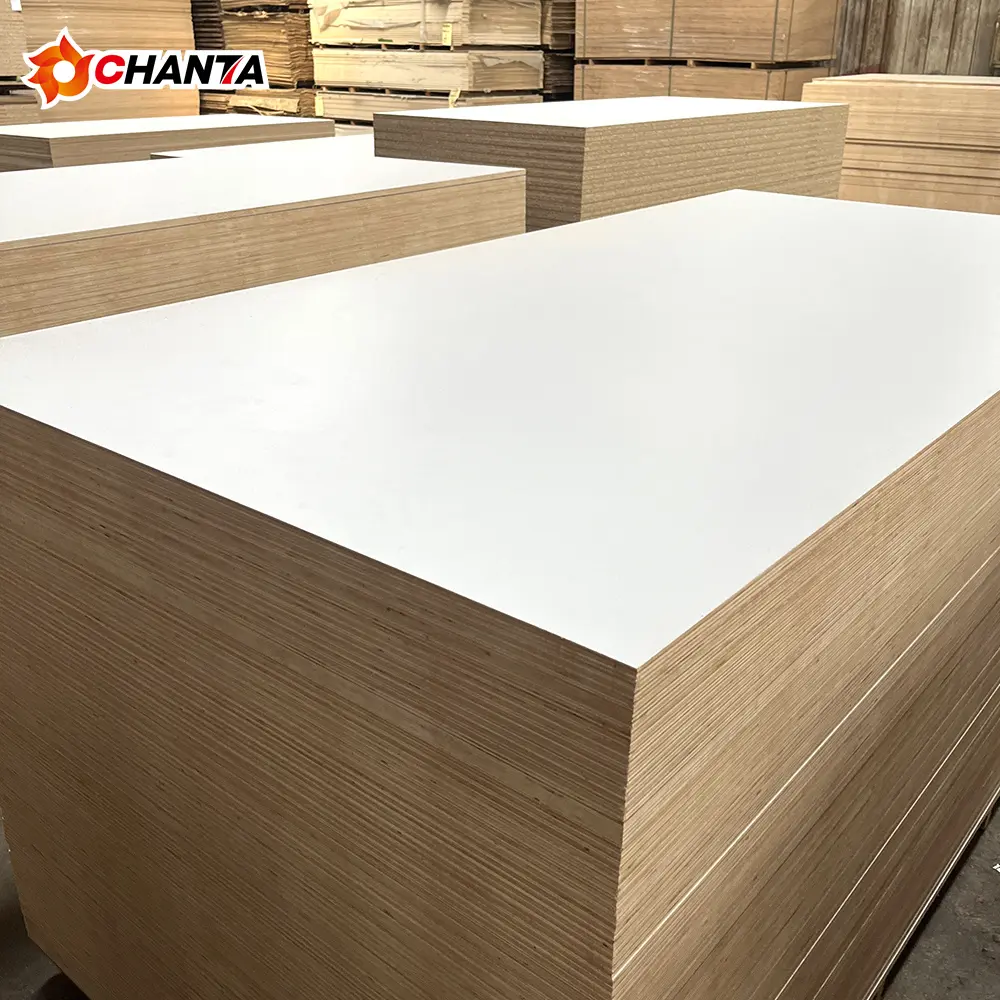
Full Birch Core
Full birch core plywood uses birch veneers throughout the entire panel. Every layer consists of birch wood, creating a highly uniform structure with excellent density and strength.
This is generally considered the premium option for furniture and industrial applications.
Advantages:
- Excellent strength-to-weight ratio
- Superior screw-holding performance
- Outstanding CNC machining quality
- Highly stable construction
- Consistent density throughout the panel
Disadvantages:
- Higher production cost
- Heavier than some alternative cores
Full birch core plywood is commonly used for:
- High-end furniture
- Kitchen cabinets
- Commercial interiors
- CNC-cut furniture components
- Architectural millwork
Combi Core
Combi core combines birch face veneers with lighter core materials such as poplar or mixed hardwood. The goal is to balance performance and cost.
Many buyers choose combi core because it provides good strength while reducing overall weight and price.
Advantages:
- More affordable than full birch core
- Lighter weight
- Good dimensional stability
- Suitable for many furniture applications
Disadvantages:
- Lower density than full birch core
- Reduced screw-holding strength
Poplar Core
Poplar core plywood uses lightweight poplar veneers in the center layers. This type of plywood is widely used in furniture production where weight reduction is important.
Advantages:
- Lightweight
- Cost-effective
- Easy to handle and transport
Disadvantages:
- Lower strength than birch core
- Less suitable for heavy structural loads
Typical applications include:
- Wardrobes
- Light furniture
- Interior decorative panels
Eucalyptus Core
Eucalyptus core plywood has gained popularity because eucalyptus wood offers higher density and strength than poplar while remaining cost competitive.
Advantages:
- Good strength
- Competitive pricing
- Improved durability
Disadvantages:
- Can be heavier than poplar core
- Quality depends on veneer grading
Many importers sourcing from Vietnam consider eucalyptus core an attractive balance between performance and affordability.
Mixed Hardwood Core
Mixed hardwood core plywood combines multiple hardwood species within the core structure. This type is often used when manufacturers prioritize cost efficiency.
Performance varies depending on the wood species used, making supplier quality control especially important.
Advantages:
- Lower manufacturing cost
- Flexible sourcing
- Widely available
Disadvantages:
- Density may vary
- Performance can be inconsistent between suppliers
Full Birch Core vs Mixed Core Comparison
| Feature | Full Birch Core | Mixed Core |
|---|---|---|
| Strength | Excellent | Moderate |
| Density Consistency | Very High | Variable |
| Screw Holding | Excellent | Moderate |
| CNC Performance | Excellent | Good |
| Weight | Higher | Lower |
| Cost | Higher | More Affordable |
For manufacturers focused on precision, durability, and premium products, full birch core remains the preferred choice. Mixed core solutions may be more suitable for cost-sensitive projects.
Which Core Type Is Best for Furniture Manufacturing?
The answer depends on the furniture category and production requirements.
For premium furniture:
- Full birch core is recommended.
For mid-range furniture:
- Combi core often provides the best balance.
For lightweight furniture:
- Poplar core may be sufficient.
For budget-focused production:
- Mixed hardwood core can help reduce material costs.
Many furniture factories use multiple core types within the same product line depending on the structural demands of each component.
How Core Structure Affects Strength, Weight and CNC Performance
Core construction directly impacts manufacturing efficiency.
| Core Type | Strength | Weight | CNC Performance |
|---|---|---|---|
| Full Birch Core | ★★★★★ | ★★★★☆ | ★★★★★ |
| Combi Core | ★★★★☆ | ★★★☆☆ | ★★★★☆ |
| Poplar Core | ★★★☆☆ | ★★★★★ | ★★★☆☆ |
| Eucalyptus Core | ★★★★☆ | ★★★☆☆ | ★★★★☆ |
| Mixed Hardwood Core | ★★★☆☆ | ★★★☆☆ | ★★★☆☆ |
For CNC furniture production, consistency is often more important than maximum strength. Uniform density reduces tool wear and improves cutting quality.
What EU and US Importers Should Look For
Global buyers should evaluate more than just price when sourcing plywood.
Key questions include:
- What core type is being supplied?
- Is the core construction documented?
- Are there internal voids?
- How consistent is the density?
- Can the supplier provide production specifications?
Importers should also request samples and evaluate machining performance before confirming large orders.
Many buyers moving supply chains to Southeast Asia are increasingly sourcing from Vietnam because of production capacity, export experience, and competitive pricing.
How TOP WOOD Controls Core Quality in Vietnam
As a professional Vietnam plywood manufacturer under Chanta Group, TOP WOOD focuses on maintaining consistent core quality across production batches.
Our quality control process includes:
- Veneer selection and grading
- Moisture content monitoring
- Controlled glue application
- Pressing parameter management
- Random internal structure inspection
Rather than focusing solely on appearance, TOP WOOD emphasizes structural consistency because long-term customer satisfaction depends on how the panel performs during production and use.
For furniture manufacturers, wholesalers, and distributors, reliable core construction reduces waste, improves machining efficiency, and supports consistent product quality.
Final Thoughts
Choosing the right birch plywood core type is one of the most important decisions in plywood sourcing. While surface appearance often receives the most attention, the internal structure determines strength, machining quality, dimensional stability, and long-term performance.
Full birch core remains the premium choice for demanding applications, while combi core, poplar core, eucalyptus core, and mixed hardwood core each offer unique advantages depending on budget and project requirements.
As a trusted brand under Chanta Group, TOP WOOD supplies Vietnam birch plywood solutions designed for furniture manufacturing, interior projects, and international distribution. By understanding plywood core construction, buyers can make more informed decisions and select the material that delivers the best balance of performance and value.